Kayak hulls significantly impact the performance of a kayak. The shape and design dictates the speed, maneuverability, and stability.
If you are new to the sport, knowing more about the impacts will help you prepare for them and, ultimately, choose a kayak that fits your paddling style.
Let’s take an in-depth look at different types of kayak hull available at your disposal.
Photo by ZCFei via Shutterstock
Who This Guide Is For?
This guide will help new and intermediate paddlers who want to understand how hull shape affects stability, speed, and maneuverability before buying a kayak.
It is also useful for anyone comparing recreational, touring, fishing, and whitewater kayaks and wondering why they handle so differently.
What Factors Did We Take In Account?
- Stability Type: Understanding primary versus secondary stability matters because it determines how a kayak feels when you first sit in it versus when it tips onto its edge.
- Intended Water Conditions: Matching hull shape to your typical water matters because a hull built for flatwater performs poorly in rapids and vice versa.
- Skill Level: Your experience level matters because hard chines and deep V hulls demand edging technique and body control that beginners have not yet developed.
- Speed and Tracking: How far and fast you plan to paddle matters because displacement hulls track straight efficiently while planing hulls sacrifice tracking for maneuverability.
- Maneuverability Needs: How quickly you need to turn matters because rocker profile and hull cross-section directly control how a kayak responds to turning strokes.
Things To Note
- Hull shape alone does not determine performance, since kayak length, width, and materials also play major roles.
- Kayaks with specialized hulls often perform poorly outside the conditions they were designed for.
- Stability is subjective, so a hull that feels steady to an experienced paddler may feel tippy to a beginner.
- Manufacturer terminology for hull types is not standardized, which can make cross-brand comparisons confusing.
13 Different Types of Kayak Hulls
- Planing Hulls
- Displacement Hulls
- V-Shaped Hulls
- Pontoon Hulls
- Flat Hulls
- Rounded Hulls
- Deep V-Shaped Hulls with Soft Chine
- Deep V-Shaped Hulls with Hard Chine
- Shallow V-Shaped Hulls with Hard Chine
- Shallow V-Shaped Hulls with Soft Chine
- Flat Hulls with Soft Chine
- Rounded Hulls with Continuous Rocker
- Multi-Chine Hulls
What Are Chine and Rocker?
Chine and rocker are two common terms that you will hear when you are researching how specific manufacturers designed the hulls of their kayaks.
So we must begin by explaining what they are and how they impact the way a kayak handles on the water.
Explaining Chine
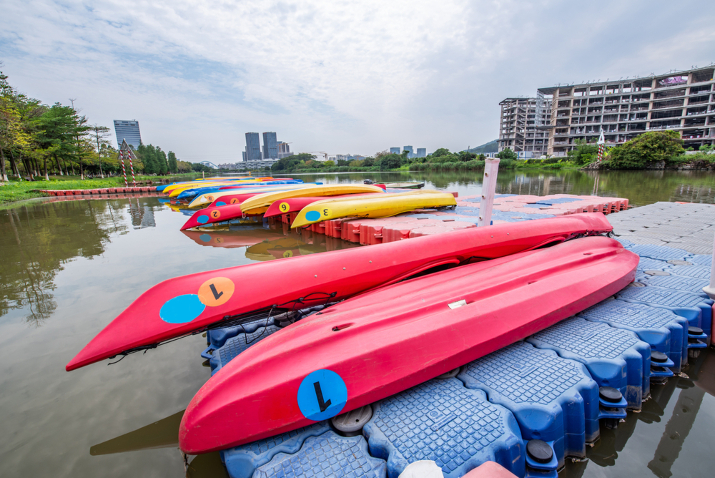
Photo by Lili.Q via Shutterstock
On a kayak, chine refers to the point where the bottom (hull) of the kayak joins with the sides (gunwales). A kayak’s chine is usually defined as hard or soft depending on whether this joining point is more or less defined.
A kayak with a harder chine makes it easier for the paddler to continue planing when the kayak goes sideways or begins to spin. You will often find harder chines on whitewater kayaks, even if the sharper edges make it easier for the kayak to catch and flip instantly.
A kayak’s chine can essentially vary from zero degrees up to 90 degrees. While the latter would theoretically deliver the best performance, even skilled kayakers would find it impossible to control a kayak with 90-degree chines.
A kayak with softer chines will be more forgiving for beginner and intermediate paddlers. There is no edge to catch and capsize your kayak and it is also easier to predict the kayak’s behavior if you run aground in shallow water or make contact with a submerged object.
At the end of the day, only very skilled paddlers graduate to paddling a kayak with hard chines. This is because it demands great technique and good body control, which only comes with practice and experience.
Our description of chine also would not be complete without mentioning multi-chine kayaks. This style of chine seeks to combine the best features of hard and soft chine to deliver a kayak that can handle a wider variety of environments and conditions.
Explaining Rocker
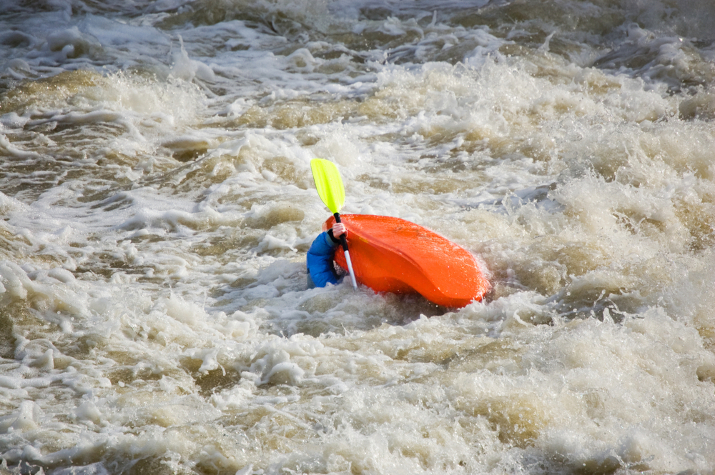
Photo by Andromed via Shutterstock
Rocker is defined as the amount of curvature in the hull from bow to stern. This is a little different than chine because it is less of a “more or less” equation and more about the style of rocker a kayak has.
Generally speaking, there are two types of kayak rockers. There is continuous rocker and kick rocker.
A kick rocker is when the bottom of the kayak is relatively flat for its majority and then the ends angle up dramatically. The effect is to create a disc-like surface that makes play moves relatively easy while keeping the tips up and out of the water.
Continuous rocker describes a kayak where there is a curvature in the hull all the way from the bow back to the stern. Kayaks with continuous rocker tend to be more maneuverable and make it easier to execute quick turns.
This is because this style of rocker minimizes the amount of hull that is in contact with the water when you are sitting in your kayak. While this only applies to whitewater kayaking, this style of rocker is also preferred for “boofing,” which is a method used to run steep drops with potentially shallow water at the bottom.
A Quick Note on Primary Versus Secondary Stability
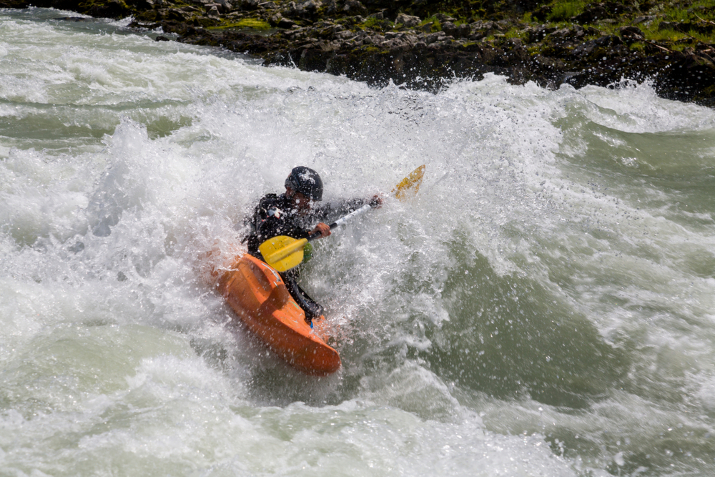
Photo by Trofimov Pavel via Shutterstock
A lot of these hull types will impact the primary or secondary stability of your kayak. So it makes sense for you to know how those two things differ before we progress to explaining the different types of kayak hulls.
Primary stability is the kayak’s ability to remain stable when you are sitting still in the water (or even paddling quite slowly). If you are new to kayaking, you will often know if your kayak has poor primary stability from the moment you sit inside (or on top) of it.
Secondary stability refers to the kayak’s ability to resist capsizing when it is tipped on its side. Most recreational kayakers do not worry too much about secondary stability, but it begins to become more important when you are paddling in rougher waters.
Certain scenarios (such as coastal fishing) call for a good balance of both primary and secondary stability. Other situations (whitewater rapids require a kayak with great secondary stability and kayaks for beginners prioritize primary stability) require more of one or the other.
Types of Kayak Hulls Explained
1. Planing Hulls
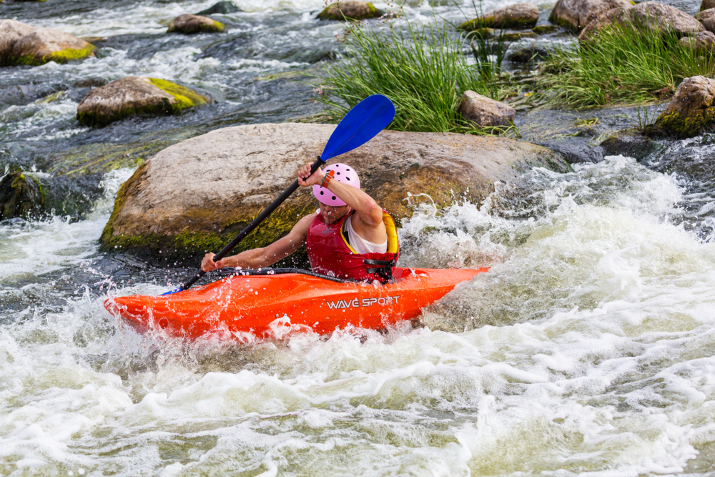
Photo by Vladyslav Solopchenko via Shutterstock
A planing hull has a flat bottom section with sides that rise up at a very defined angle. Kayaks with this type of hull tend to plow through the water very inefficiently when paddled slowly and can also be a bit unstable when sitting still.
That is why you will find planing hulls on many whitewater kayaks because it gives them certain advantages on fast-moving water. As their speed increases, the planing hull will rise to the surface of the water.
This makes it much easier for the paddler to spin and control the kayak with less effort. Kayaks with planing hulls are not meant for paddling in a straight line, but they are great for avoiding rocks, trees, and other obstacles on a fast-moving river.
2. Displacement Hulls
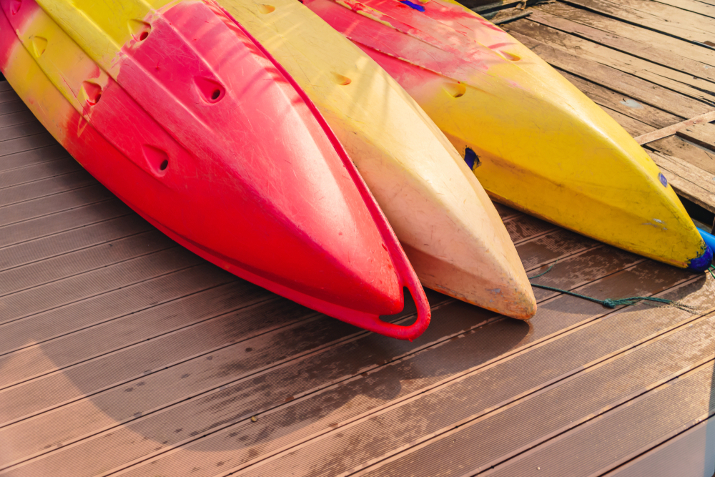
Photo by SingjaiStocker via Shutterstock
Displacement hulls are found on some of the oldest boats in the world and, naturally, they were and still are used (albeit in smaller versions) on many traditional kayaks used for a variety of purposes.
This type of hull usually has a continuous rocker throughout the profile and cross-section. They move through flat, calm water relatively efficiently because they offer a more rounded and, therefore, streamlined shape than kayaks with planing hulls.
This type of hull also boasts a centerline (sometimes known as a keel) that makes it easier for you, as the paddler, to keep the boat tracking in a straight line.
However, the downside to that more well-defined keel is that kayaks with this type of hull can be more susceptible to damage when you run aground or unexpectedly strike a submerged object.
3. V-Shaped Hulls
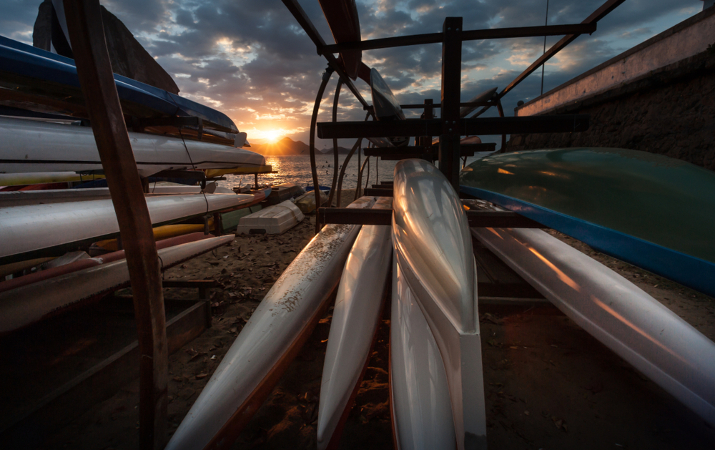
Photo by Nick Photoworld via Shutterstock
This is a type of displacement hull that is categorized by its deep, V-shape (no surprise there!). You will find this type of kayak hull on many kayaks designed for racing and touring because it is highly effective at reaching and maintaining higher straight-line speeds.
This is largely because the V-shape allows the kayak to cut through the water with minimal drag. You will find many long-distance kayakers using vessels with this type of hull, but they can sometimes be difficult for beginners because they can feel a little tippy when you first sit inside of them.
That is because they offer more secondary stability than primary stability. However, once you get moving (kind of like riding a bike), they will start to feel more stable.
The downside of this hull type is that the deep shape of the hull makes it harder to make quick turns. You will need multiple paddle strokes to change directions instead of a single swoop like you would need with some planing hulls.
4. Pontoon Hulls
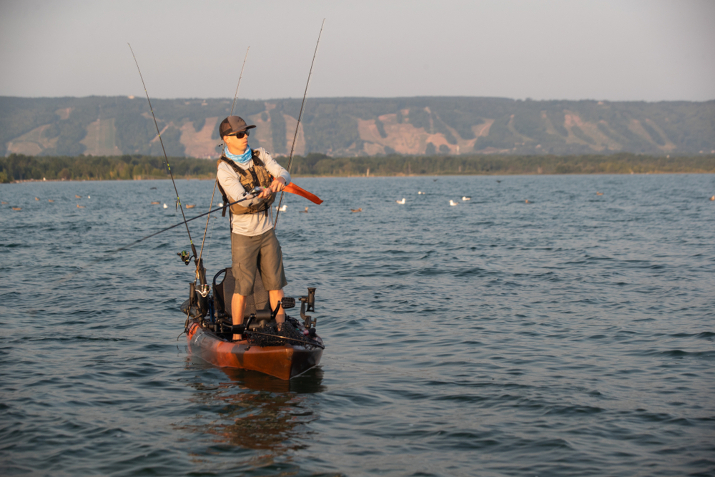
Photo by GROGL via Shutterstock
Many river fishing kayaks out there boast pontoon hulls because they offer incredible primary stability. Keep in mind that this hull type is sometimes called a “tunnel” hull instead of pontoon.
Whether it is labeled as “pontoon” or “tunnel”, this hull type combines the best attributes of flat and rounded hulls to provide excellent stability without compromising your ability to make solid headway when you do want to relocate.
This hull type is often used on fishing kayaks because that style of kayaking often involves dropping anchor or remaining in one place for a significant period of time for casting. It also sometimes requires enough stability for the paddler to stand up and fish.
As you might imagine, then, this hull type is not exactly known for its top speeds. However, it will be more efficient than a flat hull when you are paddling on calm lakes, slow-moving rivers, and protected coastal bays.
5. Flat Hulls
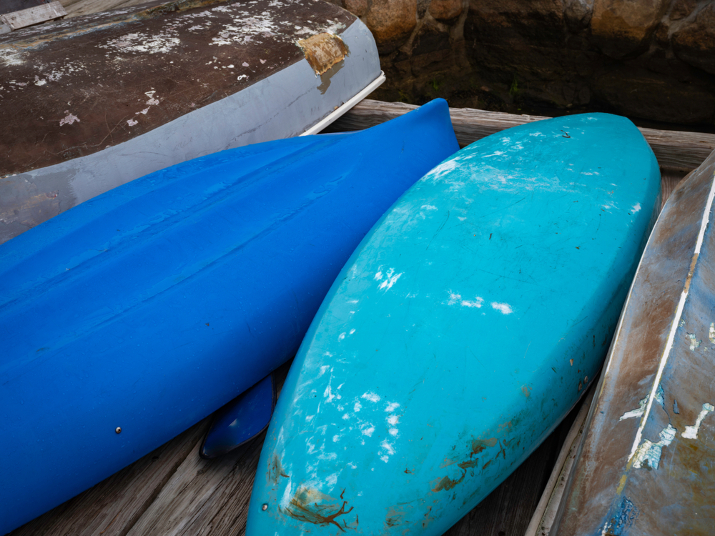
Photo by NayaDadara via Shutterstock
Flat hulls are also true to their name and involve a large, flat area at the middle section of the hull. This is a style of planing hull that is used on a variety of different types of kayaks, including whitewater playboats and lake fishing kayaks.
This type of hull is known most for delivering excellent primary stability, but also provides good maneuverability as well. When all is said and done, however, factors like length, width, and rocker will ultimately dictate the final product of a kayak with a flat hull.
6. Rounded Hulls
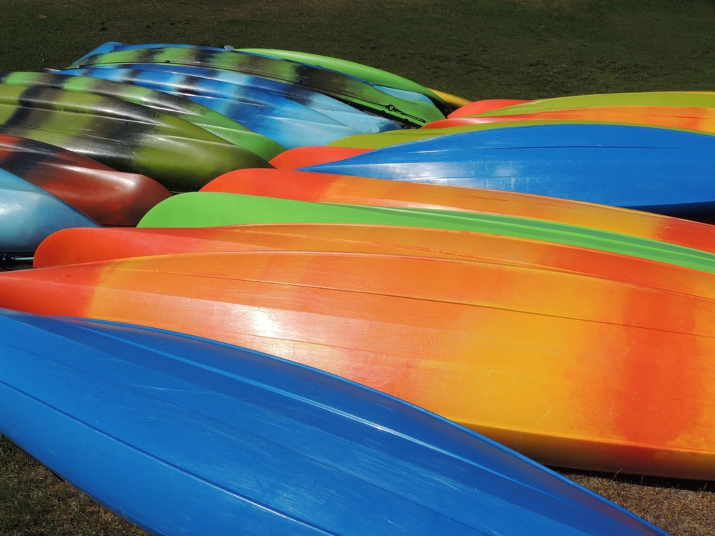
Photo by Lulub via Shutterstock
This is another type of displacement hull that is characterized by its torpedo-like shape. While that shape is not quite as dramatic as what you would find on a V-shaped kayak, for example, it still delivers good top speed due to decreased water resistance.
This type of hull also typically provides more secondary stability than primary stability. This can make kayaks with rounded hulls a good choice for any conditions or locations that require quick maneuvers.
7. Deep V-Shaped Hulls with Soft Chine
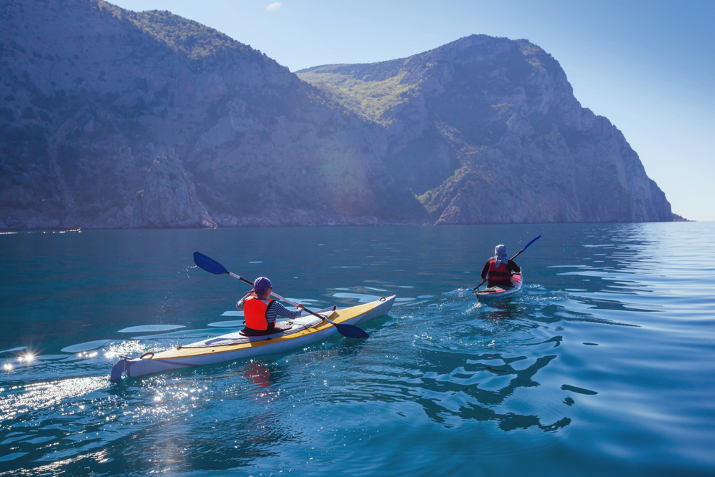
Photo by Kuznetcov_Konstantin via Shutterstock
Now we start to get into more technical hull shapes for more specific applications. This hull style is going to be best for intermediate paddlers with decent skills and an interest in getting into longer paddles.
For instance, you will find this style of hull mostly on touring kayaks because it will be forgiving for folks still learning while still providing good speed and tracking ability for covering longer distances.
8. Deep V-Shaped Hulls With Hard Chine
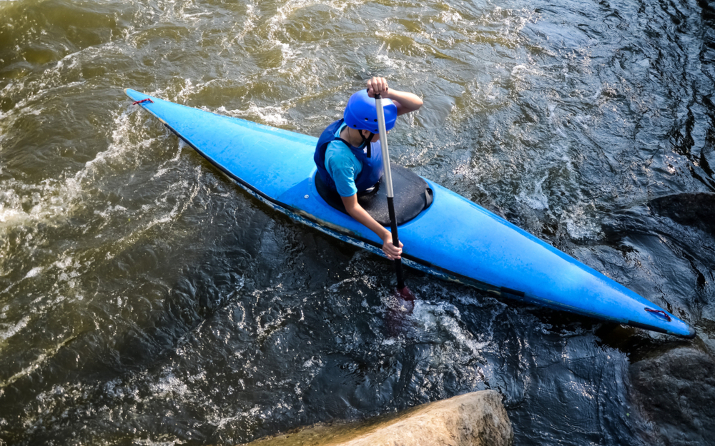
Photo by Valerka Stepankov via Shutterstock
This hull style combines speed and tracking ability with added planing ability if you find yourself sideways on swift water. It is a specialized hull type that is usually only sought after by more experienced paddlers.
9. Shallow V-Shaped Hulls With Hard Chine
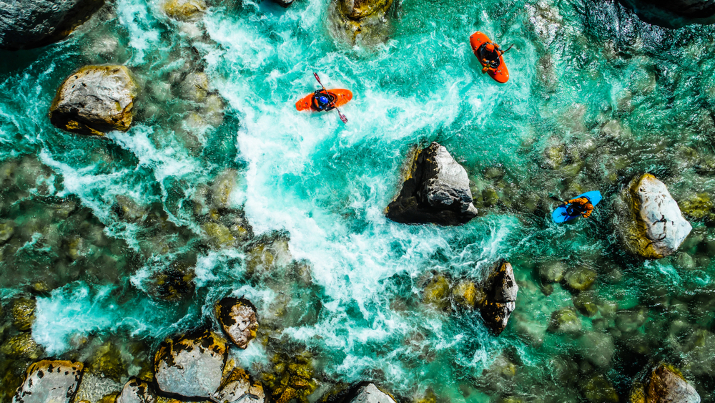
Photo by Janossy Gergely via Shutterstock
The shallower V-shaped hull with hard chines is more common for experienced whitewater kayakers. It can be a great choice for rivers with a combination of flatwater and whitewater because it provides speed and tracking on flat water while still offering planing ability on fast-moving waters.
10. Shallow V-Shaped Hulls With Soft Chine
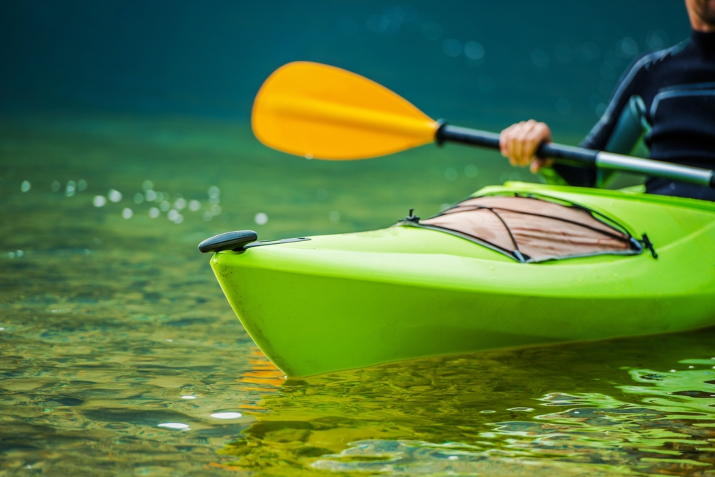
Photo by Virrage Images via Shutterstock
Kayaks with this type of hull can be great for intermediate paddlers that are taking the first step up from a beginner kayak with a rounded hull. It will provide better tracking ability and higher top speeds while still being forgiving and less likely to capsize if you run into unexpectedly shallow waters.
Some whitewater kayaks for beginners also utilize this hull type because it is less likely to tip if you hit submerged objects (or make contact with objects that were perfectly visible!).
11. Flat Hulls With Soft Chine
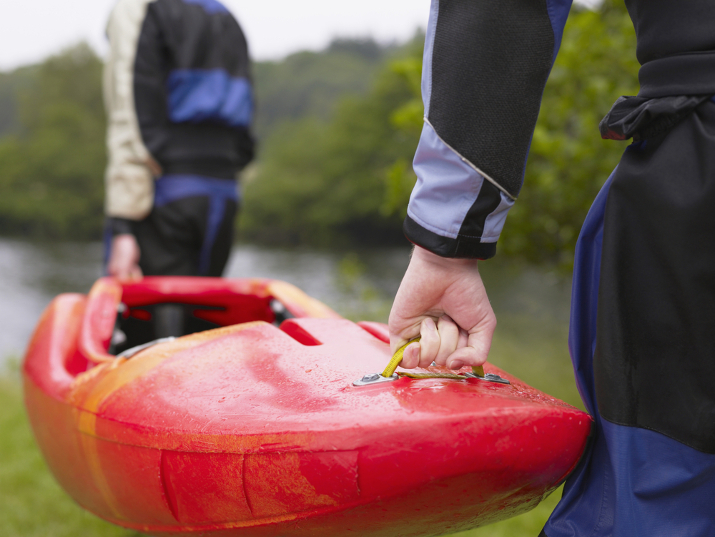
Photo by sirtravelalot via Shutterstock
Most kayaks with flat hulls will also have soft chines so that they aren’t susceptible to catching an edge and tipping when you are spinning or moving sideways. As you might suspect, this hull type is most commonly found on whitewater kayaks.
12. Rounded Hulls With Continuous Rocker
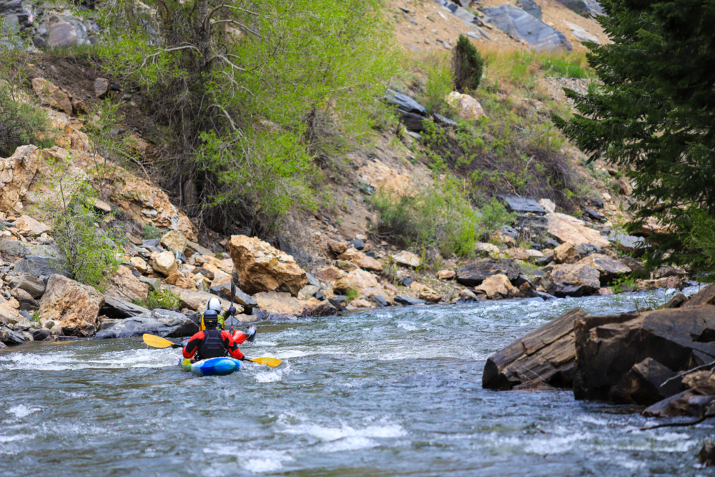
Photo by Steve Boice via Shutterstock
You will find this hull type on crossover kayaks that are meant for paddling both flatwater and whitewater. It will offer the tracking ability of a rounded hull kayak with the maneuverability provided by its continuous rocker.
13. Multi-Chine Hulls
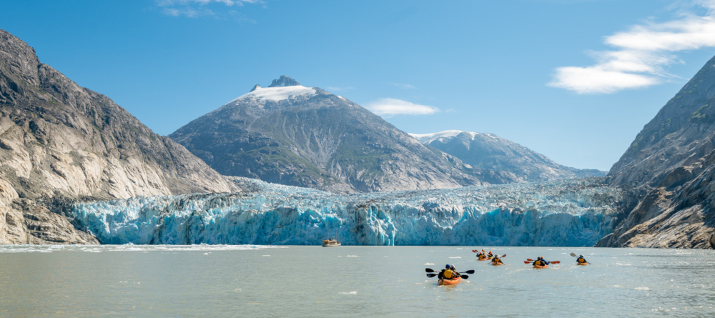
Photo by Nickolas Warner via Shutterstock
As we mentioned above, kayaks with multi-chine hulls tend to be quite versatile for paddling in all types of conditions. It may not be a surprise, then, that this hull style is well-known in Alaskan and Canadian paddling circles.
The chines have less acute angles than kayaks with hard chines, which minimizes the amount of natural turn that occurs when you lean the kayak to one side or the other.
Some experienced paddlers come to appreciate (and rely on) the natural turn they get when leaning a hard chine kayak over, but others get annoyed by it requiring corrective paddle strokes.
People Also Ask
What type of kayak hull is best for beginners?
Flat hulls and pontoon hulls are generally best for beginners because they offer strong primary stability, meaning the kayak feels steady the moment you sit in it. Shallow V hulls with soft chines are another forgiving option that lets newer paddlers build skills without constant fear of capsizing.
What is the difference between a planing hull and a displacement hull?
A planing hull has a flat bottom that rises to the water’s surface at speed, making the kayak easy to spin and maneuver, which suits whitewater paddling. A displacement hull has a rounded or V-shaped profile that pushes through the water, tracking straighter and moving more efficiently at lower speeds, which suits touring and recreational paddling.
Does hull shape affect how fast a kayak goes?
Yes, hull shape has a major effect on speed. V-shaped and rounded displacement hulls cut through water with less drag, making them faster over long distances, while flat and planing hulls trade top-end speed for stability and quick maneuvering.
What hull type is best for kayak fishing?
Pontoon hulls, sometimes called tunnel hulls, are the most common choice for fishing kayaks because their exceptional primary stability lets anglers sit still, cast, and sometimes stand. Flat hulls are also popular for fishing calm lakes and slow-moving rivers.
Can one kayak hull handle both flatwater and whitewater?
Some crossover designs, such as shallow V hulls with hard chines, attempt to balance flatwater tracking with planing ability on fast water. However, no single hull truly excels at both, so paddlers who regularly face very different conditions often end up owning more than one kayak.
Final Thoughts
Photo by Chris Bradshaw via Shutterstock
As a final note, we should mention that this is far from an exhaustive list of all the different types of kayak hulls out there these days. As you can probably tell, there are many different possibilities to combine different hull shapes with hard or soft chine and more or less rocker.
Now that we know more about the types of kayak hulls, you should be able to narrow down your search for a new kayak significantly. There are, however, several other factors you must consider before you make a purchase.
So we would encourage you to check out our full guide on what to look for when buying your first kayak. It will help you identify the type, size, and features that will suit you best, especially if you are a beginner.
From there, it will be time to take your new kayak out on your favorite local waterway. As always, we encourage new kayakers to enroll in a kayaking course to learn basic skills and build confidence.
You may also have some luck finding fellow paddlers via local paddling groups that organize via social media accounts so that you do not have to paddle alone when you are just learning!